How To Download Themes For Android
Styles and themes on Android allow you to separate the details of your app designfrom the UI structure and behavior, similar to stylesheets in web design.
- Android Phone Themes Free Download
- How To Download Themes For Android Windows 7
- How To Download Themes For Android Phone
A style is a collection of attributes thatspecify the appearance for a single View.A style can specify attributes such as font color, font size,background color, and much more.
A theme is a type of style that's applied to an entireapp, activity, or view hierarchy—not just an individual view. When you apply your styleas a theme, every view in the app or activity applies each style attributethat it supports. Themes can also apply styles to non-view elements, such asthe status bar and window background.
Styles and themes are declared in a styleresource file in res/values/, usually named styles.xml.
1180 Android Themes. Download the best themes for Android phone and tablet free by selecting from the list below.
Figure 1. Two themes applied to the same activity:Theme.AppCompat (left) and Theme.AppCompat.Light (right)
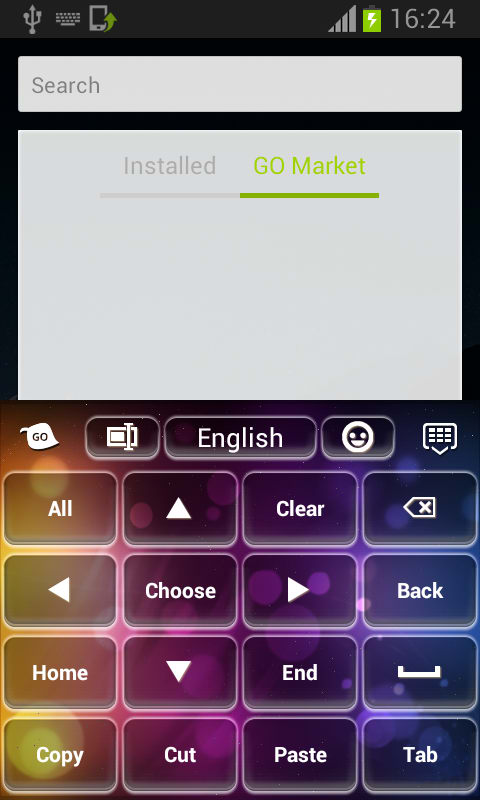
Download Whatsapp Themes For Android Device. There is Many blog share post about the Whatsapp Download themes for android, But not provided direct Download Link. But below a list of themes download link to find, and you can use that on your Android device. Theme Chooser Themes – Ready Resource With Detailed List of Available Themes Another great resource to find themes is that Android goodies haven, the XDA Developers Forum. There’s a running thread, Official MEGA CM10/CM10.1 Theme Chooser, with around 800 themes complete with screenshots and download information. Download Keyboard Themes For Android now and start enjoying its awesome features and unique designs! It was created to be used with most Android versions! Don't forget to share this amazing keyboard themes app with your friends, so they can have more fun with their phones too.
Create and apply a style
To create a new style or theme, open your project's res/values/styles.xmlfile. For each style you want to create, follow these steps:
- Add a
<style>element with a name that uniquely identifies the style. - Add an
<item>element for each style attribute you want to define.The
namein each item specifies an attributeyou would otherwise use as an XML attribute in your layout. Thevalue in the<item>element is the value for that attribute.
For example, if you define the following style:
You can apply the style to a view as follows:
Each attribute specified in the style is applied to that viewif the view accepts it. The view simply ignores any attributes that it doesnot accept.
Note:Only the element to which you add the style attributereceives those style attributes—any child views do not apply the styles. If you wantchild views to inherit styles, instead apply the style with theandroid:theme attribute.
However, instead of applying a style to individual views,you'll usually apply styles as a theme for your entire app, activity,or collection of views.
Extend and customize a style
When creating your own styles, you should always extend an existing style from theframework or support library so that you maintain compatibility with platform UI styles.To extend a style, specify the style you want to extend with the parent attribute.You can then override the inherited style attributes and add new ones.
For example, you can inherit the Android platform's default text appearance and modify it as follows:
However, you should always inherit your core app styles from the Android Support Library.The styles in the support library provide compatibility withAndroid 4.0 (API level 14) and higherby optimizing each style for the UI attributes available in each version.The support library styles often have a name similar tothe style from the platform, but with AppCompat included.
To inherit styles from a library or your own project, declare the parent style namewithout the @android:style/ part shown above.For example, the following example inherits text appearancestyles from the support library:
You can also inherit styles (except those from the platform) by extendinga style's name with a dot notation, instead of using the parent attribute.That is, prefix the name of your style withthe name of the style you want to inherit, separated by a period. You should usually do thisonly when extending your own styles, not styles from other libraries. For example,the following style inherits all styles from the GreenText style aboveand then increases the text size:
You can continue inheriting styles like this as many times as you'd like by chaining on more names.
Note: If you use the dot notation to extend a style, and you also include the parent attribute, then the parent styles override any styles inheritted through the dot notation.
To find which attributes you can declare with an <item> tag,refer to the 'XML attributes' table in the various class references. Allviews support XML attributes from thebase View class, and many views add their own special attributes.For example, the TextView XMLattributes includes the android:inputType attribute that you can apply to a text view that receivesinput, such as an EditText widget.
Apply a style as a theme
You can create a theme the same way you create styles. The difference is how youapply it: instead of applying a style with the style attribute on a view,you apply a theme with the android:theme attributeon either the <application> tag or an<activity> tag in the AndroidManifest.xml file.

For example, here's how to apply the Android Support Library's material design'dark' theme to the whole app:
And here's how to apply the 'light' theme to just one activity:
Now every view in the app or activity applies the styles defined in the given theme. If a viewsupports only some of the attributes declared in the style, then it applies only those attributesand ignores the ones it does not support.
Beginning with Android 5.0 (API level 21) and Android Support Library v22.1,you can also specify the android:theme attribute to a view in your layout file.This modifies the theme for that view and anychild views, which is useful for altering theme color palettes in a specific portionof your interface.
The previous examples show how to apply a theme such as Theme.AppCompatthat's supplied by the Android Support Library. Butyou'll usually want to customize the theme to fit your app's brand. The bestway to do so is to extend these styles from the support library and overridesome of the attributes, as described in the next section.
Style hierarchy
Android provides a variety of ways to set attributes throughout your Androidapp. For example, you can set attributes directly in a layout, you can apply astyle to a view, you can apply a theme to a layout, and you can even setattributes programmatically.
When choosing how to style your app, be mindful of Android's style hierarchy. In general, you should use themes and styles as much as possible for consistency. If you've specified the same attributes in multiple places, the list below determines which attributes are ultimately applied. The list is ordered from highest precedence to lowest:
- Applying character- or paragraph-level styling via text spans to
TextView-derived classes - Applying attributes programmatically
- Applying individual attributes directly to a View
- Applying a style to a View
- Default styling
- Applying a theme to a collection of Views, an activity, or your entire app
- Applying certain View-specific styling, such as setting a
TextAppearanceon aTextView
Figure 2. Styling from a span overrides styling from atextAppearance.
If you’re trying to style your app and not seeing the results you expect, it's likely that other styling is overriding your changes. For example, if you apply a theme to your app, along with a style to an individual View, the style attributes would override any matching theme attributes for that View. Note, however, that any theme attributes that aren't overridden by the style are still used.
TextAppearance
One limitation with styles is that you can apply only one style to a View. In a TextView, however, you can also specify a TextAppearance attribute which functions similarly to a style, as shown in the following example:
TextAppearance allows you to define text-specific styling while leaving a View’s style available for other uses. Note, however, that if you define any text attributes directly on the View or in a style, those values would override the TextAppearance values.
TextAppearance supports a subset of styling attributes that TextView offers. For the full attribute list, see TextAppearance.
Some common TextView attributes not included are lineHeight[Multiplier|Extra], lines, breakStrategy, and hyphenationFrequency. TextAppearance works at the character level and not the paragraph level, so attributes that affect the entire layout are not supported.
Customize the default theme
When you create a project with Android Studio, it applies a material design themeto your app by default, as defined in your project's styles.xml file. ThisAppTheme style extends a theme from the support library and includes overrides forcolor attributes that are used by key UI elements, such asthe app bar and the floating action button (if used).So you can quickly customize your app's color design by updating the provided colors.
For example, your styles.xml file should look similar to this:
Notice that the style values are actually references to other color resources, definedin the project's res/values/colors.xml file. So that's the file youshould edit to change the colors.But before you start changing these colors, preview your colors with theMaterial Color Tool. This tool helps you pickcolors from the material palette and preview how they'll look in an app.
Once you know your colors, update the values in res/values/colors.xml:
And then you can override whatever other styles you want. For example, you canchange the activity background color as follows:
For a list of attributes you can use in your theme, see the table ofattributes at R.styleable.Theme. And when adding stylesfor the views in your layout, you can alsofind attributes by looking at the 'XML attributes' table in the view class references. Forexample, all views support XML attributes fromthe base View class.
Most attributes are applied to specific types of views, and some apply to all views.However, some theme attributes listed at R.styleable.Themeapply to the activity window, not the views in the layout.For example, windowBackground changesthe window background and windowEnterTransition defines a transition animation to usewhen the activity starts (for details, see Startan Activity with an Animation).
The Android Support Library also provides other attributes you can use to customizeyour theme extended from Theme.AppCompat (such as the colorPrimaryattribute shown above). These are best viewed in thelibrary's attrs.xml file
Note: Attribute names from the support librarydo not use the android: prefix. That's used only for attributes from theAndroid framework.
There are also different themes available from the support library that youmight want to extend instead of the ones shown above. The best place to see the available themesis the library's themes.xml file.
Add version-specific styles
If a new version of Android adds theme attributes that you want to use, you can add them toyour theme while still being compatible with old versions. All you need is anotherstyles.xml file saved in a values directory that includes theresource versionqualifier. For example:
Because the styles in the values/styles.xml file are available forall versions, your themes in values-v21/styles.xml can inherit them.As such, you can avoid duplicating styles by beginning with a 'base' theme and thenextending it in your version-specific styles.
For example, to declare window transitions for Android 5.0 (API level 21) and higher, you needto use some new attributes. So your base theme in res/values/styles.xmlcould look like this:
Then add the version-specific styles in res/values-v21/styles.xml as follows:
Android Phone Themes Free Download
Now you can apply AppTheme in your manifest file and the system selectsthe styles available for each system version.
For more information about using alternative resources for different devices, readProviding Resources.
Customize widget styles
Every widget in the framework and support library has a default style. For example, when youstyle your app using a theme from the support library, an instance of Button is styled using theWidget.AppCompat.Button style. If you'd like to apply a different widget style to abutton, then you can do so with the style attribute in your layout file. For example,the following applies the library's borderless button style:
How To Download Themes For Android Windows 7
And if you want to apply this style to all buttons, you can declare it in yourtheme's buttonStyle as follows:
You can also extend widget styles, just like extending any other style, and thenapply your custom widget style in your layout or in your theme.
How To Download Themes For Android Phone
To discover all of the alternative widget styles available from the support library, look at theR.style reference for fields that begin withWidget. (Ignore the styles that begin with Base_Widget.) Remember toreplace all underscores with periods when using the style name in your resources.